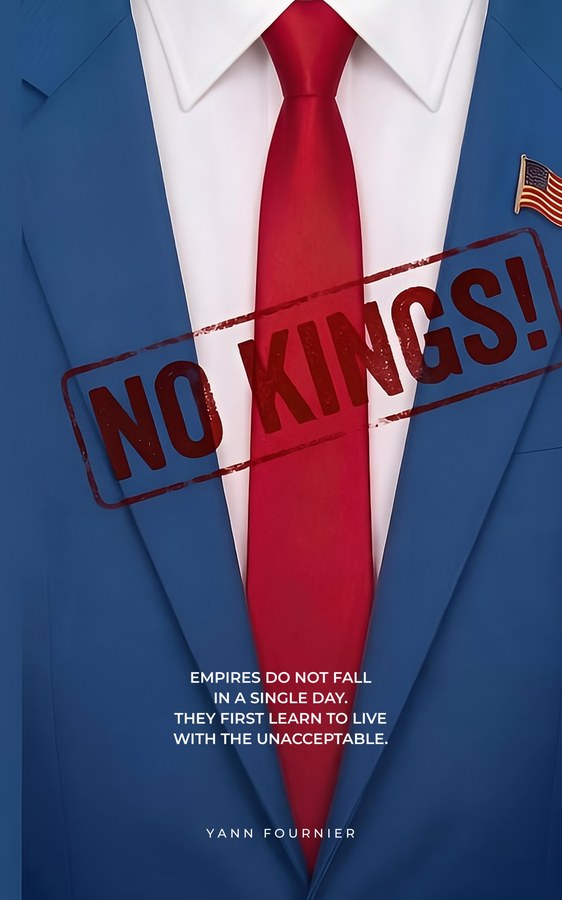
Books that look at the present before it becomes the past.
We live in a world that produces more information in a single day than an entire generation could once have absorbed. Events move so quickly that the previous one barely has time to be understood before it is replaced by the next.
One war replaces another.
One scandal erases another.
A truth becomes an opinion, an opinion becomes a fact, and a fact disappears beneath the next wave.
We don't suffer from a lack of information.
We are saturated with it.
And that saturation has consequences. The more we are exposed to everything, the less we truly look. The more we receive, the less we seek. The more we react, the less we think.
Critical thinking does not disappear overnight.
It wears away.
It cracks.
Little by little, it is replaced by habit, reflex, automatic outrage, and ready-made opinions.
We call this Infosclerosis.
The word describes a disease without a diagnosis: a gradual hardening of our ability to distinguish reality from the noise surrounding it.
Our ambition is simple: to publish what resists.
Books that do not try to keep pace with the information cycle, but instead confront it with time.
Texts that question rather than dictate.
Authors who embrace doubt rather than sell certainty.
Books that do not merely tell us what happened, but try to understand what it says about us.
And above all, books that seek to awaken something that the endless flow of information tends to numb: critical thinking.
Not to tell readers what to think.
Quite the opposite.
To make them want to think for themselves.
To question an assumption. To doubt a certainty. To look beyond the narrative. To search for contradictions. To accept the possibility of changing one's mind. And sometimes, to have the intellectual courage to ask whether we ourselves are simply believing exactly what we have been taught to believe.
We do not claim to possess the truth.
We would rather provoke the questions that allow us to search for it.
Because an event disappears.
A narrative can survive.
An idea can cross generations.
And a few pages written at the right moment can sometimes do more than document an era: they can keep our eyes from becoming accustomed to it.
That is why we publish.
To document the present before it is rewritten by the next thing.
To think before reacting.
To look before believing.
To question before accepting.
To awaken critical thinking.
To resist Infosclerosis.